
 So, full disclosure, one of our reasons for extending our travels in Europe to almost 7 weeks was, wait for it, education. It always amazes us as to what we know (and more importantly, what we don't know!) when we get out of our own winery. That isn't to say that we don't love our own wines, but it's interesting to see how others approach growing grapes and making wines (especially when their region maybe has 1000 years of experience).
From the inception of the idea for this fact-finding trip, Maggie always had the idea to learn more about Alvarinho and a lower-alcohol expression made up in the Vinho Verde region of northern Portugal. And now having spent five days in Monção e Melgaço (Portugal), we also need to understand that the Rias Baixas region of Spain (making Albariño...the same variety) needs to be included in any tasting.
But why this pilgrimage to Portugal? The start is Maggie's 'M-Series' of wines (right now Cabernet Franc and Riesling) that express her (and now my) interest in having some lower alcohol wines that naturally show off their uniqueness. And the impetus of this is noting that as we get older, we are enjoying lower alcohol wines (and we sleep better at night too!).
On a side note, we are talking about wines where we pick the grapes at a lower sugar level, thus naturally making a lower alcohol wine (less sugar for the yeast to convert into alcohol). This is different than a de-alcoholized wine which has a complex process of removing the alcohol post fermentation.
Now, not all varieties are capable of making beautiful wines being picked at lower brix (sugar) level. But Riesling, Cabernet Franc (with the right clone) and Alvarinho are certainly in the mix of the varieties that can embrace this. And thus it was our job, nay our duty to go learn more about Alvarinho in Portugal.
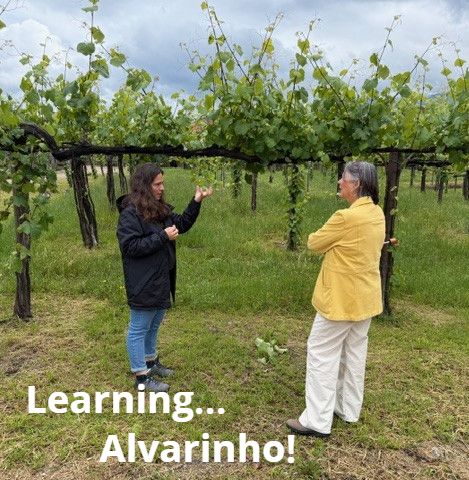
Now that you know the background, what are some of the things we learned. First, and most importantly, acid is everything in this variety. Although we already focus our picking decisions on flavor and pH levels (an aspect of the acidity of the juice/wine), it was wonderful to hear the winemakers decision process of determining when to pick. And if you let Alvarinho get too ripe (and lose it's natural acidity), these Portuguese winemakers noted that you have lost it all. The takeaway is that we shouldn't be fearful of the naturally high acid levels of the juice, and instead embrace it.
If we do that, the wines are lively and fresh with gooseberry and tropical flavors. Some Alvarinhos edged towards a more herbal expression with light palates while others focused on the more fruitiness. And all the wines were dry! When tasting a 6-wine tasting at Quinta de Soalheiro in Melgaço, their Patchwork tasting (as it was called) showcased the terroir influences of the growing locations. Most of the vineyards in Monção e Melgaço are small individual growers bringing in small harvests. This gives the winemaker at this Quinta the opportunity to make a whole host of different wines with different expression.
When we tasted at Quinta do Regueiro with Paulo Rodrigues, our tasting consisted of all Alvarinhos but with different vineyard locations mixed with different fermentation parameters. Some were barrel fermented, some fermented in stainless tanks, and some using combinations we don't use here. It was amazing how all the wines were spectacular, and each one embraced the complexity of the oak or the fruitiness of the stainless.
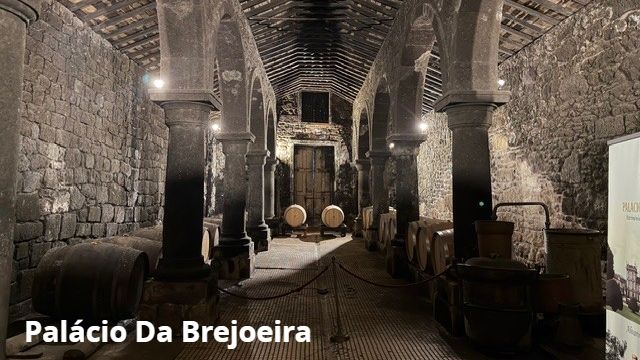
At each winery, we would let them know that we had just grafted in Albariño into our vineyards with a clone from the Delfino Family here in Apple Hill. (Thank you Derek Delfino!) The first words out of the mouth of our guide at the Palácio Da Brejoeira were that we wouldn't be able to make a Vinho Verde Alvarinho in California. And to be honest, that is true as our growing conditions are different. However, after tasting their wines and looking at their vineyards, we believe we can make something special and unique with Alvarinho up here in the El Dorado appellation.
I think that's enough for now. You can see how excited we are with what we learned, but it would fill a book or two. Don't worry, you'll be getting more information over time about our trip!